-
 E-mail:
aceally4@aceallygroup.com
E-mail:
aceally4@aceallygroup.com
-
 Wechat: +8618350222213


-

-
Aceally Logistics StorageSaving your time, Creating fortune for you

-
 Time:9/29/2026
 -
 Time:7/17/2026
 -
 Time:7/15/2026
 -
-

- CONTACT US
- Wechat: +8618350222213
- aceally4@aceallygroup.com
What Is the Best Way to Transport Flowers?
 Time:1/27/2026
 591
591Transporting flowers may seem straightforward, but ensuring they arrive fresh and undamaged requires carefully planned methodology. Flowers are perishable and sensitive to physical shock, temperature changes, and humidity fluctuations. To protect quality from greenhouse to customer, logistics professionals and florists must choose transport solutions that balance product safety, efficiency, and cost. One often-overlooked tool that plays a critical role is the flower trolley — a specialized cart designed to move flowers safely across facilities and through transport stages.
Why the Right Transport Matters
When flowers are harvested, they immediately begin to age. Rough handling or poor transport conditions can accelerate wilting, cause stem damage, bruise petals, or reduce vase life — all of which negatively impact customer satisfaction and profitability. Unlike packaged freight, flowers are living goods: they require gentle handling, stable environmental conditions, and minimized transit time.
Common Risks in Flower Transportation
- Physical shock and vibration: Can bruise petals and break stems.
- Temperature swings: Heat accelerates respiration; cold can freeze tissues.
- Humidity loss: Dry conditions cause dehydration.
- Crushing or crowding: Poor packing leads to bent blooms or crushed buds.
Controlling these risks starts with the right handling tools and transport practices.
What Is a Flower Trolley?
A flower trolley is a mobile handling cart engineered specifically for flowers. It’s designed to:
- Secure stems in upright positions.
- Allow airflow around blooms.
- Reduce manual handling through movement paths.
- Interface easily with trucks, greenhouses, and staging areas.
Flower trolleys often include features such as adjustable brackets for bunches, dividers to prevent contact damage, and wheels suitable for smooth and safe transport through facility floors.
Key Advantages of Using a Flower Trolley
1. Reduces Handling Damage
Each time flowers are lifted or shifted, there’s risk of crushing or bending. A flower trolley allows operators to transport multiple bouquets or buckets as a unit, minimizing individual handling.
2. Improves Workflow Efficiency
By consolidating flower loads on a trolley, florists and warehouse workers can move flowers quickly between processing areas — from cooler to packing to staging — without repeated lifting. A flower trolley streamlines intrafacility logistics, decreasing transit time and labor.
3. Supports Climate-Controlled Transport
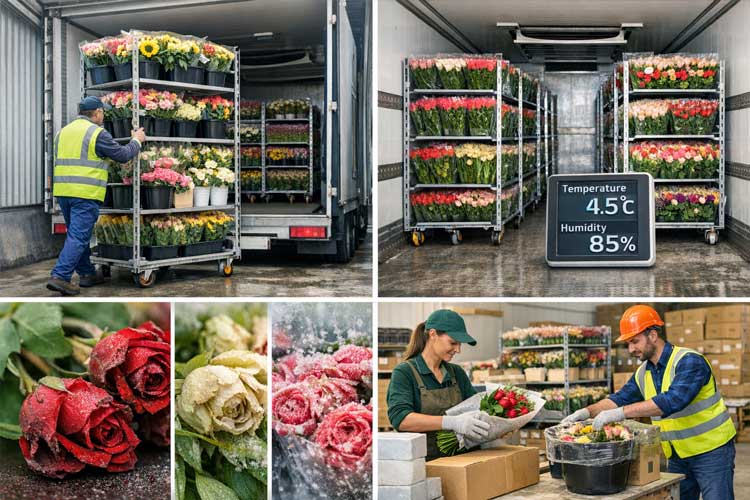
Flower trolleys can be designed to fit directly inside refrigerated trucks or coolers. Their structure supports airflow and even thermal exposure, preserving freshness in transit. This consistency is critical for sensitive blooms like roses, lilies, and orchids.
4. Enhances Packing and Orientation
Proper orientation helps flowers maintain shape. A flower trolley holds stems upright and orderly, facilitating easy access during packing and reducing the likelihood of damaged blooms.
Best Practices for Transporting Flowers
Alongside selecting the right flower trolley, follow these operational best practices:
-
Plan Transit Routes
Prepare a clear path from loading to delivery point to avoid unnecessary delays or detours. Predictable movement reduces exposure to environmental stressors. -
Maintain Stable Temperatures
Use refrigerated transport and cool storage before and during transit. Maintaining consistent, moderate cool conditions slows metabolism and prolongs freshness. -
Optimize Packing
Secure flowers in water tubes or buckets on the trolley, preventing dehydration. Spacing within the trolley should avoid compressing stems or petals. -
Train Personnel
Handling flowers requires care. Staff should be trained on how to load, secure, and move trolleys gently, and how to interface with other transport equipment without jostling the cargo. -
Monitor During Transport
Use temperature and humidity sensors to monitor conditions. If the flower trolley is in a van or cooler, real-time data helps catch and correct deviations before they affect quality.
Conclusion
The best way to transport flowers is a combination of appropriate tools, thoughtful handling, and controlled conditions. A flower trolley serves a central role in this process, enabling safer and more efficient movement of flowers within facilities and between transport stages. By prioritizing gentle handling and environmental stability, florists and logistics teams can ensure blooms arrive beautiful and fresh — ultimately protecting customer satisfaction and extending the life of the flowers they deliver.
Looking to improve flower handling efficiency and reduce transport damage?
Discover how a professional flower trolley can transform your flower logistics—from greenhouse to delivery. Contact our team to find the right solution for your operation.