-
 E-mail:
aceally4@aceallygroup.com
E-mail:
aceally4@aceallygroup.com
-
 Wechat: +8618350222213


-

-
Aceally Logistics StorageSaving your time, Creating fortune for you

-
 Time:9/29/2026
 -
 Time:7/17/2026
 -
 Time:7/15/2026
 -
-

- CONTACT US
- Wechat: +8618350222213
- aceally4@aceallygroup.com
How Do You Use a Roll Container in Logistics?
 Time:2/4/2026
 259
259In logistics environments — from warehouses and distribution centers to retail backrooms and delivery hubs — efficient movement and organization of goods directly impact operational performance. A key enabler in these flows is the roll container. This versatile handling unit supports multiple logistics use cases, helping businesses manage space, improve throughput, and reduce manual labor.
What Is a Roll Container?
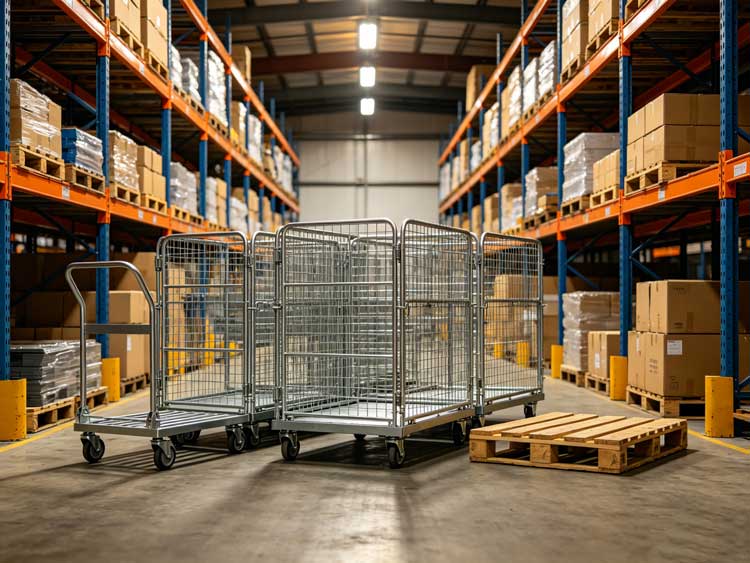
A roll container is a mobile, cage-like handling unit typically made of a sturdy frame with mesh or panel walls and swivel castors at the base. Designed for high mobility and load security, roll containers can carry products while being pushed or pulled between workstations. Their design often includes foldable or removable sides that allow flexible loading modalities.
Core Uses of a Roll Container in Logistics
1. Internal Transport and Material Flow
One of the principal logistics tasks is moving goods from one point to another within a facility. Roll containers excel in internal transport:
- Dock to Storage: After loading docks receive inventory, roll containers shuttle products into storage zones.
- Workstation Transfers: Pieces or cartons move between sorting areas, quality check stations, and packing lines.
- Outbound Moves: Finished orders are gathered in roll containers and rolled to staging zones for shipment.
The mobility of the roll container reduces reliance on forklifts for short moves and minimizes worker strain.
2. Order Picking and Packing Support
Order fulfillment often involves selecting individual items from stock shelves and aggregating them for packaging. Roll containers streamline this by:
- Providing a mobile receptacle that moves with the picker through aisles.
- Allowing sorted placement of picked items directly into designated sections inside the roll container.
- Serving as an intermediary packing station buffer — once filled, the container moves to packing lanes.
This reduces double-handling and keeps workflow continuous.
3. Staging, Sorting, and Consolidation
Efficient staging and sorting are crucial before shipments are loaded onto trucks or moved to dispatch zones. A roll container supports:
- Staging of Mixed Loads: Multiple orders or product types are collected and grouped.
- Sorting by Destination: Containers can be labeled by delivery route, customer, or urgency.
- Consolidation of Cartons: Products from different pickers can be brought together before final packing.
This enables predictable, organized logistics flows and minimizes misplaced inventory.
4. Cross-Docking and Quick Throughput
In cross-dock operations, products are rapidly transferred from inbound carriers to outbound vehicles without long-term storage. Roll containers facilitate this fast over-the-dock movement by:
- Acting as temporary holding units where inbound items are placed for immediate outbound sorting.
- Allowing fast repositioning of loads to outbound docks.
- Supporting quick load balancing when delivery schedules change.
Because roll containers are mobile and visible, they reduce bottlenecks in high-velocity environments.
5. Retail Backroom Support and Replenishment
Retail logistics teams use roll containers to:
- Transport products from stockrooms to shop floors during replenishment cycles.
- Move returns or overstock back to storage.
- Organize seasonal or promotional merchandise for quick displays.
A roll container’s open design and accessibility make it ideal for retail logistics tasks that require frequent interaction with the load.
Benefits of Using Roll Containers in Logistics
Employing roll containers delivers tangible improvements:
- Improved Space Utilization: Foldable roll containers can be nested when not in use.
- Enhanced Worker Safety: Reducing manual lifting and carrying protects workers.
- Faster Material Handling: Continuous mobility keeps goods flowing with fewer interruptions.
- Flexibility Across Functions: A roll container functions in receiving, picking, staging, and dispatch zones without process redesign.
Best Practices for Roll Container Deployment
To maximize the effectiveness of roll containers:
- Standardize Container Sizes: Align dimensions with shelving, conveyor widths, and vehicle loading bays.
- Label and Track: Use barcodes or RFID tags on roll containers to integrate them into WMS systems.
- Establish Flow Paths: Define clear routes in the facility to avoid congestion and minimize travel time.
- Maintain Equipment: Regularly inspect wheels, brakes, and frames to ensure safe, reliable use.
Conclusion
A roll container is more than a simple cart — it is a fundamental logistics asset that enhances movement, organization, and productivity. Whether improving picking efficiency, supporting rapid staging, or enabling seamless material transfers, roll containers are indispensable in structured, high-performance logistics operations.
Optimize Your Logistics Flow with the Right Roll Container
Looking to improve material handling efficiency, reduce manual labor, and streamline internal transport?
Contact us today to explore durable, customizable roll container solutions designed for modern logistics operations.