


 Time:10/30/2026
 3
Greenhouse trolleys play an important role in the daily operations of commercial nurseries, greenhouses, and garden centers. From moving potted plants between growing areas to organizing products for transport and display, the right trolley can make plant handling more efficient and reduce unnecessary manual work.
However, not every greenhouse trolley is suitable for every operation. Factors such as available space, load requirements, working conditions, and transportation needs can all influence the choice. Understanding these considerations will help you select a trolley that supports your business over the long term.
01. What Is a Greenhouse Trolley?
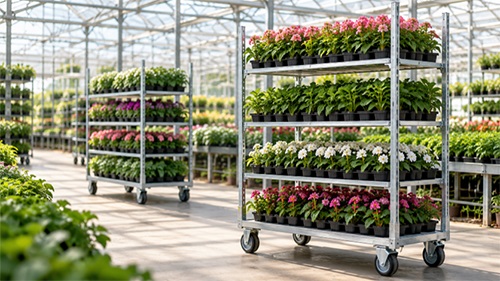
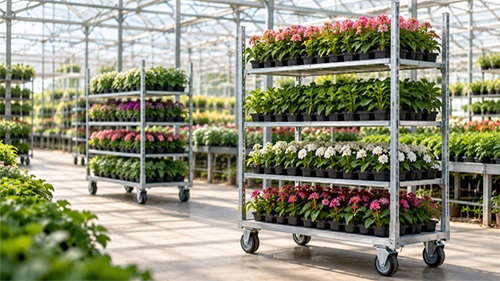
A greenhouse trolley is a mobile handling unit designed to transport, store, and organize plants and horticultural products. It is commonly used in commercial greenhouses, plant nurseries, garden centers, and flower distribution facilities.
One widely used design is the Danish trolley, which features a wheeled base, vertical posts, and removable or adjustable shelves. Its flexible structure allows growers and distributors to accommodate plants of different heights while making better use of available space.
Greenhouse trolleys can also help streamline daily operations by reducing repeated handling and making it easier to move groups of plants between different working areas.
02. Key Factors to Consider When Choosing a Greenhouse Trolley
Choosing the right greenhouse trolley involves more than selecting a suitable appearance or size. The following factors can affect its practicality, durability, and overall performance.
Size and Space Compatibility
Start by considering where the trolley will be used. Greenhouse aisles, doorways, loading areas, and storage spaces may have different clearance requirements.
A trolley that is too wide can restrict movement, while one that is too small may require additional trips to transport the same number of plants. It is also important to consider turning space, particularly in narrow aisles or busy working environments.
Choosing dimensions that suit your existing layout can improve workflow without requiring changes to your facility.
Load Capacity and Stability
Different plants and containers place different demands on a trolley. Large potted plants, wet growing media, and multiple loaded shelves can add considerable weight.
When evaluating a greenhouse trolley, consider both its overall load capacity and how weight is distributed across the shelves.
A stable frame and properly supported shelves help maintain balance during movement. For daily commercial use, consistent structural quality is particularly important.
Material and Durability
Greenhouses often have humid conditions, frequent watering, and regular exposure to moisture. These conditions make corrosion resistance an important consideration.
Steel greenhouse trolleys with suitable protective finishes, such as galvanization, are commonly used for their strength and durability.
When comparing options, pay attention to the quality of the frame, joints, shelves, and surface treatment. A well-constructed trolley can reduce maintenance requirements and provide more reliable performance over time.
Wheels and Maneuverability
Wheels have a direct impact on how easily a loaded trolley can be moved.
The appropriate wheel design depends on the working surface, operating load, and frequency of movement. Smooth concrete floors, uneven pathways, and areas with floor joints may require different wheel characteristics.
Consider wheel durability, turning ability, and ease of replacement. Where trolleys need to remain stationary during loading or unloading, suitable braking options may also be useful.
Adjustable Shelves and Flexibility
Plants vary significantly in height and shape, and these requirements may change throughout the growing season.
Greenhouse trolleys with adjustable or removable shelves offer greater flexibility for handling different plant varieties and container sizes.
By adjusting shelf positions, operators can make more effective use of vertical space while allowing sufficient clearance for plants. This is particularly useful for nurseries and distributors handling a changing range of products.
03. Choosing the Right Trolley for Different Applications
The most suitable greenhouse trolley also depends on how and where it will be used.
Commercial Greenhouses and Nurseries
In growing environments, trolleys are frequently used to move plants between production, maintenance, and dispatch areas. Easy maneuverability, corrosion resistance, and flexible shelf arrangements are especially valuable for daily operations.
Garden Centers and Retail Displays
For garden centers, greenhouse trolleys may serve both transportation and display purposes. Adjustable shelves allow different plant varieties to be presented clearly, while mobile designs make it easier to rearrange displays and replenish stock.
Plant Transportation and Distribution
In horticultural distribution, trolleys help organize plants during loading, transportation, and unloading. Structural stability, secure shelf positioning, and compatibility with handling and transport processes are important considerations.
For businesses involved in frequent deliveries, the ability to disassemble, stack, or efficiently return empty trolley components may also help reduce handling and logistics costs.
04. What to Look for in a Greenhouse Trolley Supplier
Beyond the trolley itself, choosing a reliable supplier is an important part of the purchasing process.
A manufacturer with established production capabilities and consistent quality control can help ensure that products meet the requirements of repeated commercial use.
- Manufacturing experience: Does the supplier understand the practical requirements of commercial horticultural operations?
- Quality consistency: Are materials, construction, and protective finishes controlled throughout production?
- Customization capabilities: Can the supplier accommodate different configurations or specific operational requirements?
- Service and communication: Can the supplier provide clear product information, timely support, and dependable order coordination?
For importers, distributors, and large-scale growers, reliable supply and consistent product quality can be just as important as the initial purchasing cost.
05. Frequently Asked Questions
What is the difference between a greenhouse trolley and a Danish trolley?
A greenhouse trolley is a broad term for mobile equipment used to handle plants in horticultural environments. A Danish trolley is a commonly used type, typically featuring a wheeled base, vertical posts, and adjustable shelves. The terms are sometimes used interchangeably, depending on the market and application.
What type of greenhouse trolley is best for nurseries?
For many commercial nurseries, a durable trolley with adjustable shelves, suitable load capacity, and easy maneuverability is a practical choice. The ideal design depends on plant varieties, aisle conditions, and how frequently the trolley needs to be moved.
How can greenhouse trolleys improve plant handling efficiency?
Greenhouse trolleys allow multiple plants to be moved together, reducing repeated manual handling. They can also help organize plants during growing, storage, order preparation, and transportation, supporting a more efficient workflow.
Conclusion
Choosing the right greenhouse trolley starts with understanding your daily operations. Space compatibility, structural stability, corrosion resistance, wheel performance, and shelf flexibility all influence how effectively a trolley performs in different environments.
By evaluating these factors alongside your specific application and supplier requirements, you can make a more informed purchasing decision and improve plant handling efficiency over time.
At Aceally, we understand the importance of practical, reliable material handling solutions for commercial operations. Explore our greenhouse trolley solutions or contact our team to discuss the requirements of your nursery, greenhouse, or horticultural distribution business.
Looking for a Reliable Greenhouse Trolley Solution?
Explore practical plant handling solutions for your commercial nursery, greenhouse, or distribution business.
CONTACT OUR TEAM →