-
 E-mail:
aceally4@aceallygroup.com
E-mail:
aceally4@aceallygroup.com
-
 Wechat: +8618350222213


-

-
Aceally Logistics StorageSaving your time, Creating fortune for you

-
 Time:10/14/2026
 -
 Time:9/29/2026
 -
 Time:7/17/2026
 -
 Time:7/15/2026
 -

- CONTACT US
- Wechat: +8618350222213
- aceally4@aceallygroup.com
Wire Mesh Decking Load Capacity Explained
 Time:7/15/2026
 126
126Wire mesh decking is widely used in pallet racking systems because it provides a safe, durable, and cost-effective storage surface for palletized goods. One of the most common questions warehouse managers, purchasing teams, and system designers ask is: How much weight can wire mesh decking actually support?
The answer is more complex than a single load rating. While manufacturers often provide a maximum load capacity for each deck, the actual safe working load depends on several engineering factors, including wire diameter, support channel configuration, beam spacing, material quality, and how the load is distributed across the deck.
Choosing wire mesh decking based solely on the highest advertised capacity can lead to poor performance or even safety risks if the rack configuration differs from the manufacturer's testing conditions. Understanding how load capacity is determined helps buyers select the right decking for their warehouse while ensuring long-term safety and compliance.
This article explains the key factors that influence wire mesh decking load capacity, how manufacturers evaluate performance, common mistakes to avoid, and practical considerations when selecting the right deck for different warehouse applications.
What Is Wire Mesh Decking Load Capacity?
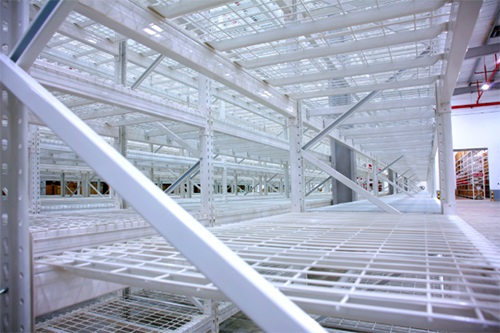
Wire mesh decking load capacity refers to the maximum weight that a wire deck can safely support when installed correctly within a pallet racking system. This value is established through engineering calculations and load testing performed under specified conditions rather than being a fixed number that applies to every installation.
Manufacturers typically publish a Safe Working Load (SWL), which represents the recommended maximum load under normal operating conditions. The SWL already includes an appropriate safety margin and should always be followed instead of relying on theoretical maximum strength.
Another important consideration is the type of load applied to the deck. A uniformly distributed pallet places weight evenly across the surface, allowing the deck to perform as intended. In contrast, concentrated point loads, such as heavy machinery or equipment resting on a small contact area, create much higher localized stress and may significantly reduce the allowable load capacity.
Because every warehouse uses different pallet sizes, beam spacing, and storage methods, the same wire deck may carry different rated capacities depending on the installation environment. For this reason, buyers should always review the manufacturer's load chart rather than comparing load ratings from different suppliers without considering the testing conditions.
What Factors Affect Wire Mesh Decking Load Capacity?
Several engineering factors work together to determine how much weight a wire mesh deck can safely support. Understanding these variables helps warehouse operators select the appropriate decking configuration instead of relying on load capacity alone.
1. Wire Diameter
The diameter of the steel wire is one of the primary factors affecting structural strength. Thicker wires provide greater resistance to bending and deformation, allowing the deck to support heavier pallet loads while maintaining stability over time.
However, increasing wire diameter also adds weight and manufacturing cost. For this reason, manufacturers normally select different wire sizes according to the intended storage application rather than simply using the thickest wire available.
2. Support Channels
Support channels are welded beneath the wire mesh to transfer pallet loads directly to the rack beams. The number, thickness, and design of these channels have a significant impact on overall load capacity.
For light-duty applications, two support channels may be sufficient. Medium- and heavy-duty warehouses often require three or four channels to distribute loads more evenly and reduce deck deflection. Properly designed support channels also improve long-term durability under repeated loading cycles.
3. Beam Span and Rack Configuration
The distance between pallet rack beams is another important factor that directly affects wire mesh decking load capacity. The wider the beam span, the greater the bending force applied to the decking surface when a pallet is placed on top.
For example, a wire mesh deck installed on beams with a shorter span generally experiences less deflection because the load is transferred through more closely positioned support points. In comparison, the same deck installed across a wider beam opening may require additional reinforcement or a different design to achieve the same capacity rating.
This is why wire decking capacity cannot be evaluated separately from the pallet rack system. The deck, beams, and rack structure work together as a complete storage system. A decking model that performs well in one rack configuration may not have the same rating when installed with different beam sizes or spacing.
Before selecting wire mesh decking, buyers should confirm key rack specifications, including beam length, beam profile, beam spacing, and pallet dimensions. These details allow manufacturers to recommend a suitable decking design based on actual warehouse conditions.
4. Load Distribution: Uniform Load vs Point Load
The way weight is distributed across wire mesh decking has a major influence on its actual performance. Two pallets with the same total weight may create completely different stresses depending on how the load contacts the deck surface.
| Load Type | Description | Impact on Decking |
|---|---|---|
| Uniform Load | Weight is distributed evenly across the deck surface, such as a standard pallet with evenly placed products. | Usually provides better load performance and lower stress concentration. |
| Point Load | Weight is concentrated in a small area, such as machinery legs or irregular cargo. | Creates higher localized stress and may reduce safe capacity. |
Most pallet rack applications are designed around uniformly distributed pallet loads. However, warehouses storing heavy equipment, steel components, or irregular products should pay additional attention to point loading conditions.
If a storage application involves concentrated loads, it is recommended to consult with the decking manufacturer to determine whether additional reinforcement or a different decking configuration is required.
5. Material Quality and Manufacturing Process
The material and manufacturing quality of wire mesh decking also influence its long-term load performance. Two products with similar dimensions may have different durability if they use different steel grades, welding processes, or surface treatments.
Common factors that affect product quality include:
- Steel grade and mechanical strength of the wire material
- Welding quality at wire intersections and support channels
- Accuracy of manufacturing dimensions
- Surface protection such as powder coating or galvanization
High-quality wire mesh decking should maintain its structural performance after repeated loading and unloading cycles. In busy distribution centers where pallets are frequently moved by forklifts, consistent manufacturing quality is especially important for maintaining warehouse safety.
When comparing suppliers, buyers should consider not only the stated load capacity but also the testing method, production standards, and quality control procedures behind the product rating.
Key Factors That Influence Wire Mesh Decking Capacity
| Factor | How It Affects Capacity | Important Consideration |
|---|---|---|
| Wire Diameter | Thicker wire improves resistance to bending. | Balance strength and cost requirements. |
| Support Channels | More channels improve load distribution. | Choose based on pallet weight. |
| Beam Span | Longer spans increase deflection. | Must match rack configuration. |
| Load Distribution | Point loads create higher stress. | Consider product shape and pallet design. |
| Material Quality | Affects durability and long-term performance. | Check manufacturing standards. |
How Is Wire Mesh Decking Load Capacity Tested?
Wire mesh decking load capacity is normally determined through engineering evaluation and load testing. A professional manufacturer does not simply calculate capacity based on steel thickness or wire diameter alone. Instead, the complete decking structure is evaluated under specific rack installation conditions.
During testing, the decking is installed on pallet rack beams according to the intended application. A controlled load is then applied to evaluate how the deck performs under weight. Engineers typically monitor factors such as deflection, structural deformation, and whether the decking maintains its stability during loading.
The purpose of testing is not only to determine the maximum weight a deck can temporarily withstand but also to establish a safe working load for regular warehouse operations.
Common Load Testing Considerations
- Load Distribution: Testing should reflect realistic pallet loading conditions rather than only concentrated force.
- Deflection Control: Excessive bending can affect pallet stability even before structural failure occurs.
- Rack Configuration: Testing results depend on beam spacing, support conditions, and installation method.
- Repeated Loading: Commercial warehouses require decking that can withstand frequent pallet placement and removal.
Because testing conditions vary between manufacturers, buyers should always compare wire decking ratings together with the supporting information behind those ratings, including deck size, beam spacing, and support channel configuration.
Static Load vs Dynamic Load: What Is the Difference?
When discussing wire mesh decking capacity, it is important to understand the difference between static and dynamic loading conditions.
| Load Type | Definition | Example |
|---|---|---|
| Static Load | A load that remains stationary without significant movement. | A pallet stored on a rack for an extended period. |
| Dynamic Load | A load affected by movement, impact, or repeated handling. | Forklift placing or removing pallets. |
In real warehouse environments, wire mesh decking is exposed to dynamic conditions because pallets are continuously loaded and unloaded by forklifts. For this reason, professional manufacturers consider operational factors instead of only evaluating a one-time maximum load.
Selecting decking with an appropriate capacity margin helps reduce risks caused by daily warehouse activities, accidental impacts, or variations in pallet loading.
Why Safety Factor Matters for Wire Mesh Decking
A safety factor is an important consideration when determining the recommended load rating of wire mesh decking. It provides a margin between the maximum tested strength of the product and the working load allowed in daily operation.
Warehouse conditions are rarely perfect. Actual usage may include small differences in pallet weight, uneven loading, forklift operation, and repeated handling cycles. Without an appropriate safety margin, these variations could gradually affect product performance.
For this reason, responsible manufacturers do not recommend operating decking at its absolute maximum strength. Instead, they provide a safe working load that allows reliable performance throughout the product's service life.
When selecting wire mesh decking, choose capacity based on your actual storage requirements, not only the heaviest possible load. A properly rated deck provides better safety, durability, and long-term value.
Typical Wire Mesh Decking Load Capacity
Wire mesh decking capacity varies depending on deck dimensions, wire specifications, support channels, and pallet rack configuration. The following table provides general reference values only. Actual ratings should always be confirmed with manufacturer testing data.
| Deck Size | Support Channels | Typical Capacity Range |
|---|---|---|
| 42" × 46" | 2 Channels | 800 - 1,200 kg |
| 42" × 46" | 3 Channels | 1,200 - 1,800 kg |
| 48" × 46" | 3 Channels | 1,500 - 2,000 kg |
| 48" × 52" | 4 Channels | 2,000 kg+ |
These values are examples only. Actual wire decking capacity depends on steel specifications, manufacturing design, rack beam conditions, and testing standards.
Common Mistakes When Choosing Wire Mesh Decking Capacity
Selecting wire mesh decking based only on the advertised load rating can create problems during actual warehouse operation. Many capacity-related issues happen because buyers overlook the relationship between the decking, pallet rack structure, and storage conditions.
1. Comparing Load Ratings Without Checking Test Conditions
Different manufacturers may use different testing conditions when determining load capacity. A 2,000 kg rating from one supplier may not be directly comparable with another supplier's rating if the deck size, beam spacing, or support configuration is different.
2. Choosing Capacity Based Only on Average Pallet Weight
Some warehouses select decking based on the average pallet weight but ignore heavier loads that may occasionally be stored. Future changes in inventory, pallet design, or product types can increase actual loading requirements.
3. Ignoring Point Loads
A pallet may not always distribute weight evenly across the decking surface. Products with small contact areas can create concentrated pressure points that exceed normal operating conditions.
4. Using Damaged or Modified Decking
Cutting, bending, welding, or modifying wire mesh decking without proper engineering evaluation can affect structural performance. Damaged decking should be inspected and replaced when necessary.
5. Overlooking Warehouse Environment
Applications such as cold storage, food distribution, and manufacturing facilities may require additional considerations, including corrosion protection, hygiene requirements, and frequent handling conditions.
Frequently Asked Questions About Wire Mesh Decking Capacity
How much weight can wire mesh decking hold?
Wire mesh decking capacity depends on factors such as deck size, wire diameter, support channels, and rack configuration. Common warehouse applications may range from several hundred kilograms to more than 2,000 kg per level, but the actual rating should be confirmed with manufacturer specifications.
Does thicker wire mesh decking always mean higher capacity?
Not necessarily. Wire diameter is important, but capacity also depends on support channel design, beam spacing, material quality, and load distribution.
Can wire mesh decking support uneven loads?
Wire decking is mainly designed for palletized loads with relatively even weight distribution. Heavy point loads may require additional evaluation or reinforcement.
How does beam spacing affect wire decking capacity?
A wider beam span generally increases stress and deflection on the decking surface. The deck rating must match the actual rack beam configuration.
Should I choose the highest load capacity available?
Not always. Selecting capacity based on actual warehouse requirements is usually more practical and cost-effective than choosing an unnecessarily heavy-duty option.
How often should wire mesh decking be inspected?
Regular inspections are recommended, especially in busy warehouses where forklifts frequently load and unload pallets. Damaged or deformed decking should be evaluated before continued use.
Conclusion
Wire mesh decking load capacity is determined by more than a single weight rating. Factors including wire diameter, support channels, beam span, load distribution, material quality, and testing conditions all influence the final performance of the decking system.
When selecting wire mesh decking for a warehouse, the safest approach is to evaluate the complete storage environment rather than focusing only on the maximum advertised capacity. Properly matched decking improves pallet stability, protects stored goods, and supports safer warehouse operations.
Working with an experienced wire mesh decking manufacturer can help ensure the selected product meets your rack configuration, load requirements, and long-term operational needs.