-
 E-mail:
aceally4@aceallygroup.com
E-mail:
aceally4@aceallygroup.com
-
 Wechat: +8618350222213


-

-
Aceally Logistics StorageSaving your time, Creating fortune for you

-
 Time:7/17/2026
 -
 Time:7/15/2026
 -
-
-
 Time:5/22/2026

- CONTACT US
- Wechat: +8618350222213
- aceally4@aceallygroup.com
What Are the Advantages and Disadvantages of Rolling Storage Cages?
 Time:11/5/2025
 251
251In warehouse and logistics operations, storage and transport solutions must support efficiency, flexibility and cost-control. One option frequently considered is the use of rolling storage cages.
But what exactly are the advantages and disadvantages of rolling storage cages? In this article we explore the key benefits and the limitations of these systems. By understanding both sides, you can determine whether rolling storage cages fit your workflow and storage strategy.
Advantages of rolling storage cages
❈ Mobility and ease of handling
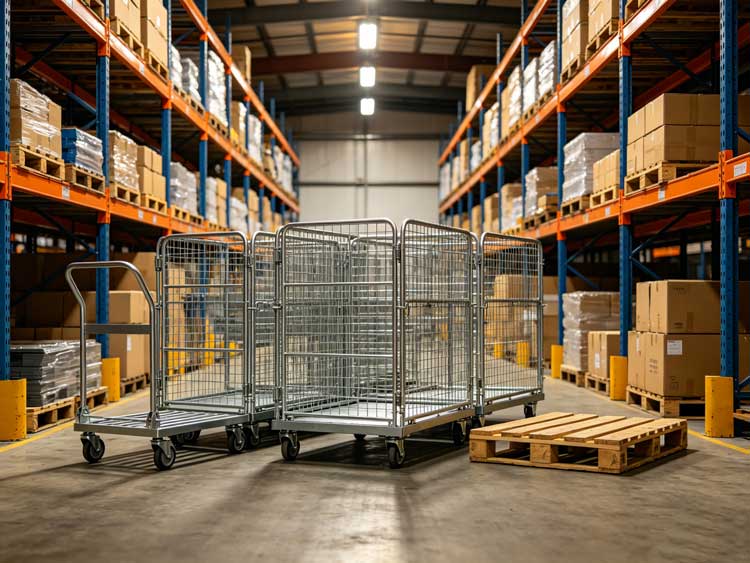
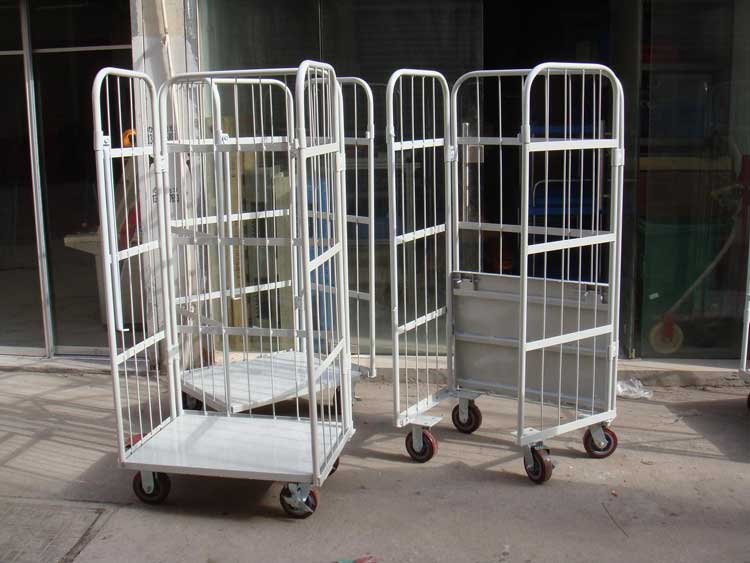
One major advantage is that rolling storage cages provide mobility. When you select metal rolling cages for warehouse inventory transport, you allow goods to be moved easily between zones, workstations or loading docks. The rolling feature reduces manual handling time and allows faster transitions between receiving, staging and shipping.
❈ Improved visibility and containment
Rolling cages often have open mesh or wire panels, which allows visibility of contents while maintaining containment. A rolling storage cage system for logistics workflow enables operators to see stock at a glance, reduce errors and secure items during transit or interim storage. This visibility supports inventory control and helps avoid misplaced items.
❈ Reusable and space-efficient design
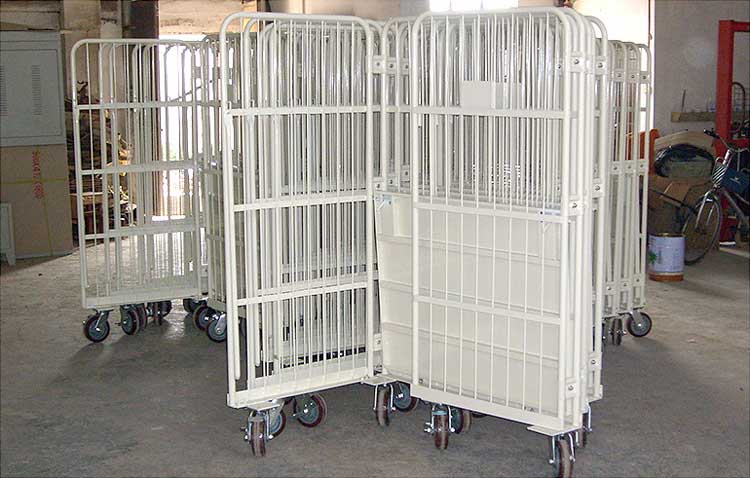
Such cages are often reusable and foldable or stackable when empty, which means a steel mesh rolling cage solution for storage and transport can help reduce return logistics cost and achieve a better utilisation of space when the cages are empty. This design supports multi-trip workflows and returnable container strategies, reducing reliance on disposable packaging.
Disadvantages of rolling storage cages
❈ Initial cost and maintenance requirements
While rolling storage cages offer many benefits, one disadvantage is the higher initial cost compared to simple pallets or static bins. The wheels, structural frames and mesh panels increase cost, and ongoing maintenance (wheels, bearings, welds) may add up. If utilisation is low, the ROI may be delayed.
❈ Floor space usage and stacking limitations
Even though they roll, when in use or stored, rolling cages occupy floor space. Unlike some shelf-mounted systems, empty cages may still require staging space. Also, many rolling cage designs cannot be stacked high when in use due to stability or wheel constraints, reducing vertical utilisation compared with fixed rack or bulk shelving.
❈ Load and handling constraints
Rolling cages are designed for certain load types and handling conditions. Overloading, uneven floors or high-speed transfers can compromise wheel life or cage integrity. If your operation requires heavy pallets or forklift access inside the cage, the standard design may not suffice. Mis-match between cage design and actual use may lead to damage or accidents.
How to assess whether rolling storage cages are right for your operation
❈ Analyse your flow and transport frequency
Begin by evaluating how often items need to move between zones, how many handling steps exist, and whether mobility adds clear value. If your workflow involves frequent transfers, a rolling storage cage system for logistics workflow makes sense. If stocks remain static, a fixed rack may suffice.
❈ Match load types and cage specifications
Check the size, weight, load shape and stacking behaviour of items. If you handle odd shapes or heavy pallets, confirm the cage design supports them. A metal rolling cages for warehouse inventory transport specification should align with your actual loads rather than theoretical or under-utilised design.
❈ Consider storage space, return logistics and cost-benefit
If you deploy rolling cages, make sure your facility has floor space to stage them, paths for movement, and return logistics for empty units. Evaluate cost vs benefit: the reusable nature of a steel mesh rolling cage solution for storage and transport may deliver savings if utilisation is high and return trips frequent.
Conclusion
Rolling storage cages offer clear advantages in terms of mobility, visibility and reusability—but they also present challenges related to cost, space usage and load suitability.
If your operation involves frequent transfers, variable inventory or high return logistics, rolling cages may offer strong value. Otherwise, you may prefer static systems or integrate both. Carefully evaluate your workflow, loads and space before committing.
Get Expert Guidance for Your Warehouse Storage Solution
Choosing the right metal rolling cage or warehouse system can directly impact your efficiency and safety. At Aceally Group, we specialize in designing and manufacturing customized rolling storage cages, wire mesh containers, and racking systems to match your operational needs.
Contact our team today to get a tailored quotation or technical recommendation for your warehouse project.
Send Your Inquiry Now and let our experts help you find the most efficient and durable storage solution for your business.