-
 E-mail:
aceally4@aceallygroup.com
E-mail:
aceally4@aceallygroup.com
-
 Wechat: +8618350222213


-

-
Aceally Logistics StorageSaving your time, Creating fortune for you

-
 Time:7/17/2026
 -
 Time:7/15/2026
 -
-
-
 Time:5/22/2026

- CONTACT US
- Wechat: +8618350222213
- aceally4@aceallygroup.com
The role of wire decking in warehouse racking systems
 Time:9/3/2025
 158
158
1. Introduction to Wire Decking in Warehouse Racking Systems
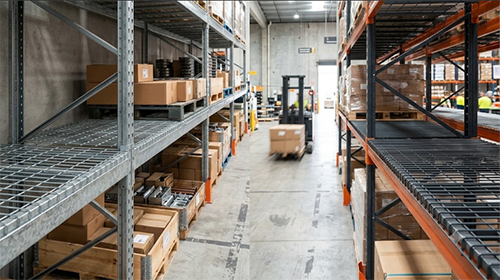
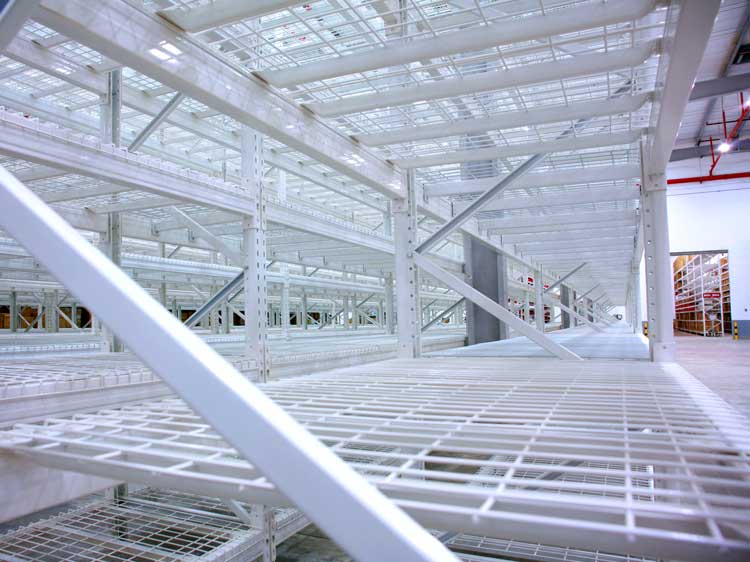
Wire decking represents a critical component in warehouse racking systems, serving as the primary supporting surface for stored items across various industrial and commercial environments. Essentially consisting of welded steel wire grids formed into panels, wire decking provides a secure foundation within warehouse rack systems while offering numerous advantages over alternative decking materials like particle board or solid metal sheets. The evolution of wire decking has transformed it from a simple supportive element to a multifunctional component that addresses safety, organizational efficiency, and operational visibility concerns in warehouse environments.
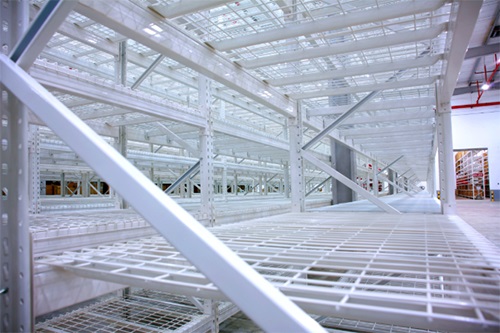
The fundamental construction of wire decking typically involves 5-6 gauge steel wire (approximately 4-5mm thickness) welded into grid patterns, most commonly 2" × 4" (50mm × 100mm) mesh configurations, though other sizes are available for specialized applications. These panels are then typically galvanized or powder-coated to resist corrosion and extend service life in demanding warehouse environments. The dimensions of wire decking panels vary significantly to accommodate different rack configurations, with common widths ranging from 42" to 72" and depths from 24" to 59" to fit standard rack sizes.
2. Key Functional Roles of Wire Decking
2.1 Enhanced Safety and Load Support
Structural Integrity: Wire decking provides exceptional load-bearing capacity, with standard decks supporting between 800-3,000 pounds distributed weight depending on wire gauge, mesh configuration, and support structure. This capacity ensures safe storage of even heavy industrial materials while maintaining system integrity.
Accident Prevention: The secure placement of wire decking within warehouse rack systems prevents shifting or displacement of stored items, reducing the risk of falling objects that could cause workplace injuries. The welded grid pattern creates a non-slip surface that minimizes product movement during loading or retrieval operations.
Fire Safety Compliance: Unlike solid decking materials that can trap heat and combustible materials, wire mesh decking meets fire code standards in most jurisdictions by allowing sprinkler systems to function effectively through the open mesh design. This characteristic can potentially lead to reduced insurance premiums for warehouse facilities.
2.2 Improved Ventilation and Visibility
Air Circulation: The open mesh design of wire decking facilitates unimpeded airflow throughout stored products, which is particularly valuable for commodities requiring ventilation such as agricultural products, chemicals, or items susceptible to moisture damage. This continuous air movement helps prevent mold growth and material degradation in humid environments.
Unobstructed Visibility: Unlike solid decking alternatives, wire decking provides complete visibility of stored items from both above and below the deck surface. This transparency enables warehouse staff to quickly identify and locate inventory without unnecessary handling or repositioning of products, significantly improving inventory management efficiency.
Light Penetration: The open structure allows light to pass through warehouse rack levels, reducing dark spots and shadows in warehouse aisles and creating a brighter, safer working environment with reduced need for additional lighting fixtures between warehouse racking systems.
2.3 Maintenance and Durability Advantages
Debris Management: The gapped construction of wire decking prevents accumulation of dust, small debris, and other particulate matter that commonly collects on solid shelving surfaces. This characteristic is particularly valuable in industries where cleanliness is critical, such as food processing, pharmaceuticals, and electronic components manufacturing.
Corrosion Resistance: Most wire decking undergoes galvanization or specialized coating processes that provide exceptional resistance to rust and corrosion. This treatment extends the product's lifespan significantly compared to wooden decking alternatives, even in challenging environments such as cold storage facilities or warehouses with high humidity levels.
Long-Term Structural Integrity: The inherent durability of steel wire construction maintains its structural properties over time without warping, sagging, or deteriorating as can occur with particle board or wooden alternatives. This consistency ensures predictable performance throughout the product's lifespan, which often exceeds decade with proper maintenance.
3. Applications and Implementation Considerations
3.1 Sector-Specific Applications
Pest Control Industry: Wire decking proves particularly valuable for pest control companies that need to store insecticides, sprays, traps, and protective clothing in an organized manner while maintaining visibility and access to all items. The open mesh design prevents accumulation of potentially hazardous chemical residues while allowing for quick inventory assessment.
Bulk Storage Environments: For bulk storage applications, wire decking provides the necessary support for heavy or irregularly shaped items while allowing forklift operators to visually identify product locations from a distance. The high weight capacity (up to 3,000 lbs for some models) makes wire decking suitable for even the most demanding industrial storage requirements.
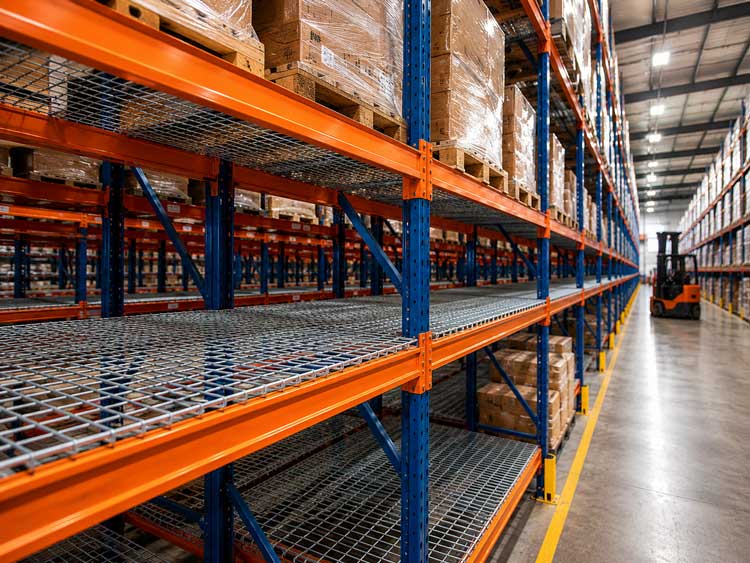
Selective Pallet Racking Systems: In selective pallet racking configurations, wire decking facilitates first-in-first-out (FIFO) inventory management by allowing clear visibility of all stock while providing necessary support for palletized goods. This combination of features makes it particularly valuable for perishable goods and other time-sensitive products.
3.2 Load Capacity and Configuration Considerations
Proper implementation of wire decking requires careful consideration of load requirements and configuration specifics. The capacity of wire decking depends on multiple factors including wire gauge, mesh density, support structure, and installation method. Most manufacturers provide detailed specifications for their products, such as the documented 800 lb capacity for 72" × 24" wire decking used with Lyon rivet racks or the 3,000 lb capacity offered by heavy-duty step channel decking measuring 42" × 59".
For larger warehouse rack systems, multiple decking panels may be required to provide complete coverage. As specifically noted in some specifications, "2-48" wire decking are required for use with 96" width racks" , highlighting the importance of proper planning and configuration to ensure complete coverage and adequate support. The bearing surface provided by the decking must appropriately distribute weight to the rack structure while preventing small items from falling through the mesh openings.
4. Design Variations and Technical Specifications
4.1 Mesh Configurations and Support Structures
Wire decking is available in several mesh configurations tailored to specific operational requirements. The most common pattern is the 2" × 4" rectangular mesh, which provides an optimal balance between open space (for visibility and ventilation) and support surface area. However, other configurations are available for specialized applications, including 50mm × 50mm (approximately 2" × 2") mesh for smaller items or 2½" × 4" patterns for enhanced support characteristics.
The support structure of wire decking varies significantly between products and applications. Some systems feature integrated support channels that run perpendicular to the mesh pattern at regular intervals, typically spaced 3-¾" apart, to enhance load distribution and prevent sagging under weight. Other designs incorporate waterfall edges that curve smoothly over beam tops to provide a continuous shelf surface without sharp edges that could damage products or packaging . These design variations allow warehouse planners to select the most appropriate wire decking type for their specific operational needs and existing warehouse rack infrastructure.
4.2 Material Technology and Manufacturing Processes
The manufacturing process for wire decking involves precision welding of steel wires into predetermined patterns using automated equipment to ensure consistency and structural integrity. The quality of these welds directly impacts the wire deck's load capacity and longevity, with superior products featuring continuous welds at all wire intersections rather than intermittent connection points. Following formation, most wire decking undergoes galvanization—a zinc coating process that provides exceptional corrosion resistance even in challenging warehouse environments.
Advanced manufacturing techniques have enabled the production of wire decking with specialized properties, including wire decks with varying wire thickness within the same panel (thicker support wires with thinner cross wires) to optimize strength-to-weight ratios. Some manufacturers offer powder coating as an alternative to galvanization, providing additional color-coding options for inventory management systems while maintaining corrosion protection. These material technologies continue to evolve, with leading manufacturers investing in research and development to produce lighter, stronger, and more durable decking solutions.
5. Selection and Implementation Considerations
5.1 Assessing Load Requirements and Compatibility
Selecting appropriate wire decking begins with a thorough assessment of load requirements, including both the static weight of stored items and any dynamic forces that may be introduced during loading or retrieval operations. Planners must consider not only the total weight to be supported but also its distribution characteristics—concentrated loads require different wire decking specifications than evenly distributed weight. The warehouse rack configuration itself also influences selection, with deeper racks typically requiring additional support channels to maintain structural integrity across the span.
Compatibility with existing warehouse rack systems represents another critical consideration. As explicitly noted in some specifications, wire decking must be matched to specific rack types, with some products designed specifically for "use with rivet rack" or "designed specifically for the FastRak™ product". The beam design of the rack system must accommodate the wire decking's support requirements, with some systems featuring flanged beams that accept standard wire decking while others require specialized mounting hardware or support brackets.
5.2 Total Cost of Ownership and Procurement Factors
While initial purchase price represents an obvious consideration, wise procurement decisions account for the total cost of ownership across the product's lifespan. This calculation should include maintenance requirements, expected service life, potential impact on insurance premiums, and operational efficiency gains. Notably, some manufacturers highlight that wire decking's compliance with fire codes may "in many cases insurance cost may be substantially reduced" , offsetting a higher initial investment through ongoing savings.
Procurement logistics also warrant careful consideration, with many suppliers noting "FOB Shipping Point" terms that place transportation responsibility on the purchaser. Additionally, minimum order quantities often apply, with some suppliers specifying a "$300 minimum order" while others offer volume discounts, as evidenced by "OVER 100 PCS - CALL FOR ADDITIONAL DISCOUNTS". These purchasing considerations should be factored into the overall procurement strategy when implementing wire decking solutions.
6. Conclusion: The Strategic Value of Wire Decking
Wire decking serves as a multifunctional component that significantly enhances the safety, efficiency, and visibility of modern warehouse racking systems. Its open mesh design provides unique advantages in ventilation, debris reduction, and light penetration while maintaining structural integrity under substantial loads. The fire safety compliance inherent in wire decking designs offers potential insurance advantages while creating safer working environments through improved sprinkler system effectiveness.
The technical evolution of wire decking has produced specialized solutions for diverse applications, from heavy-duty industrial storage to pest control inventory management. With varying mesh configurations, support structures, and material technologies available, warehouse planners can select wire decking solutions that precisely match their operational requirements and existing infrastructure. When properly selected and implemented, wire decking delivers measurable improvements in inventory management efficiency, workplace safety, and storage system longevity, making it a valuable investment for virtually any storage environment looking to optimize operations and maximize the utility of available space.