-
 E-mail:
aceally4@aceallygroup.com
E-mail:
aceally4@aceallygroup.com
-
 Wechat: +8618350222213


-

-
Aceally Logistics StorageSaving your time, Creating fortune for you

-
 Time:7/17/2026
 -
 Time:7/15/2026
 -
-
-
 Time:5/22/2026

- CONTACT US
- Wechat: +8618350222213
- aceally4@aceallygroup.com
What is wire mesh container?
 Time:8/19/2025
 245
245A Guide to Durable and Flexible Metal Wire Mesh Containers for Logistics and Warehousing
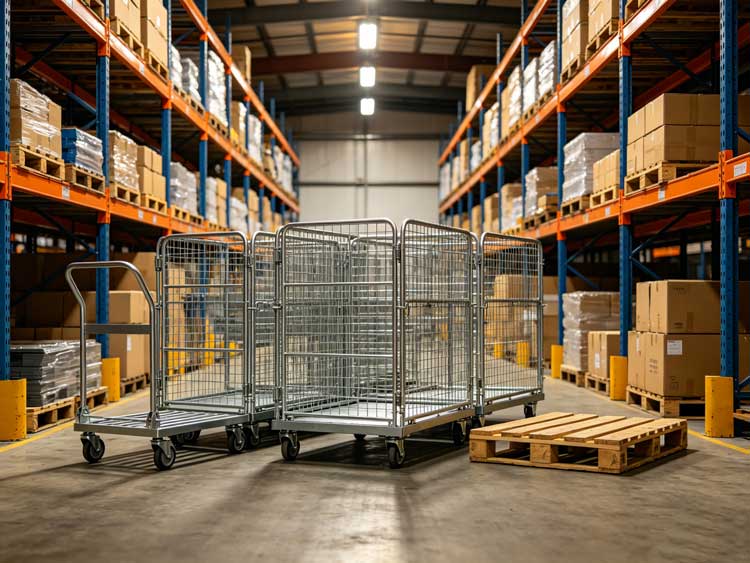
Metal wire mesh containers, commonly known as storage cages, warehouse cages, or butterfly cages, are indispensable heavy-duty logistics containers that are revolutionizing modern warehousing and material handling. Constructed of welded steel mesh and a sturdy U-channel base, these containers offer unparalleled strength and durability for transporting and storing a wide variety of goods. The open mesh design of metal mesh containers provides a clear view of the contents, facilitating inventory management and inventory management.
Key advantages include: superior space efficiency through stackability (typically up to four high); versatile compatibility with forklifts and other handling equipment; and long-term cost savings through reusability and reduced product damage. Available in standard, folding, wheeled, and heavy-duty configurations, metal mesh containers are essential components for efficient operations in manufacturing, warehousing, logistics, and retail industries.
1. Introduction to Wire Mesh Containers
In the fast-paced world of logistics and supply chain management, efficiency, durability, and visibility are paramount. Wire mesh containers have become a cornerstone technology in this environment, offering a superior alternative to traditional storage solutions such as wooden crates or solid-walled plastic boxes. These containers, typically constructed from cold-rolled hardened steel, combine strength, convenience, and flexibility—critical for modern industrial operations.
The basic design of a wire mesh container consists of a welded mesh body and a sturdy base, typically equipped with a door for easy access. This design isn't a recent innovation, but it has evolved significantly to meet the growing demands of global supply chains. Their ability to seamlessly integrate into every stage of the logistics process—from production line storage, in-factory transportation, final shipment, and even retail display—makes them an extremely flexible asset for any operation focused on optimizing material handling workflows.
The growing popularity of wire mesh containers stems from the urgent need to reduce operating costs, minimize waste (especially in the shift away from single-use packaging), and improve overall operational visibility. As industries across industries continue to pursue leaner and more sustainable operations, wire mesh containers stand out as a simple and effective solution.

2. Key Components and Structural Design
The wire mesh container's superior functionality stems from its meticulous engineering and robust structure. Each component is designed to enhance overall strength, durability, and usability.
Mesh Body Panels: Container sides are made of high-strength steel wire, typically 4.8mm to 6.4mm in diameter, welded together at the intersections. Common mesh sizes include 50x100mm, 100x100mm, and 50x50mm, designed to provide the optimal balance between sealing, visibility, and ventilation. Welding workmanship is crucial; high-quality containers feature consistent, full welds at every joint to ensure maximum structural integrity and load-bearing capacity.
Base and U-Channel Reinforcement: The base is arguably the most critical component for load bearing. It is constructed from thick-gauge U-channel steel, typically 1.8 mm or 2.5 mm thick, made from cold-rolled steel. This U-channel design offers excellent resistance to bending and deformation under heavy loads. The mesh floor is then welded to this reinforced base. Superior manufacturing processes, such as the fully welded technology mentioned in the search results, ensure that every contact point between the mesh and the base frame is welded, significantly increasing load-bearing capacity.
Doors and Locks: Most containers feature drop-down doors with robust locks. These doors offer full front access, making loading and unloading easy. The locks are designed to remain secure during movement and stacking, and are easily accessible when needed.
Corner Posts and Feet: Vertical corner posts provide primary stacking strength. The feet are designed to interlock with the top frame of the container below when stacked, forming a stable and secure column that prevents shifting during transport or storage.
3. How Wire Mesh Containers Work: Operation and Workflow Integration
Wire mesh containers offer simple and elegant operation, and their design allows for seamless integration into complex material handling workflows, significantly improving efficiency.
The typical use cycle begins at a production or distribution area, where the container is loaded with components, parts, or finished goods. The full-access gate design allows for quick and easy loading. Once filled, the container is ready for transport. Its design is inherently compatible with a wide range of material handling equipment:
Forklifts: Can lift the container from the base channels or from the bottom.
Pallet Jacks ("Earth Bulls"): Can easily move containers fitted with base channels.
Cranes and Hoists: Can lift containers via their corner posts for overhead transport.
Conveyor Systems: Can be integrated with certain container designs.
The real efficiency lies in storage. Due to their uniform size and robust construction, wire mesh containers can be stacked vertically, typically three or four units high. This maximizes the utilization of vertical space within a warehouse or transport vehicle, significantly reducing the required floor space compared to non-stackable alternatives.
When it comes to retrieval, the open grid design provides full visibility of the contents, allowing warehouse staff to quickly find the inventory they need without having to open each container or consult complex checklists. This visibility, combined with the ability to number or tag each container, simplifies inventory counting and management.
4. Benefits and Advantages
The widespread adoption of wire mesh containers is due to several compelling operational and economic benefits:
Superior durability and longevity: Made from hardened steel, often galvanized or powder-coated, these containers are built to withstand the rigors of industrial use. They are resistant to impact, moisture, and corrosion, offering a much longer service life than wooden or many plastic alternatives, which translates to a lower total cost of ownership.
Enhanced Space Utilization: The ability to securely stack up to four high allows businesses to make the most of their expensive warehouse space. Additionally, many models fold or fold flat when empty, reducing storage space by up to 75% and freeing up valuable space for other uses.
Improved Operational Efficiency and Safety: Compatible with all major material handling equipment, it reduces manual labor and speeds up transportation. The open grid design improves visibility for forklift operators and prevents hidden dangers, thereby improving safety. The secure locking mechanism prevents accidental spillage during transportation.
Inventory Visibility and Control: Managers and warehouse staff can view inventory at a glance, allowing them to quickly conduct inventory audits and reduce the time spent locating specific items. This visibility minimizes errors and improves inventory accuracy.
Environmental sustainability: As a reusable asset, wire mesh containers eliminate the need for single-use packaging materials such as wooden boxes or cartons. This significantly reduces waste generation and associated disposal costs, supporting the company's sustainability goals.
5. Common Types and Configurations
Wire mesh containers are not a one-size-fits-all solution; they come in various configurations designed for specific applications:
Standard Static Containers: The most common type, featuring a solid base and fixed walls. Ideal for general storage and stacking in warehouses.
Folding/Collapsible Containers: Designed with hinged corners that allow the entire container to be folded flat when not in use. This is a significant space-saving advantage for operations with fluctuating container needs or limited storage space for empty containers.
Containers with Casters (Rolling Cages): These containers are equipped with wheels—typically two fixed and two swivel (often with brakes)—for easy manual movement across smooth floors. They are ideal for order picking and internal logistics within production halls or distribution centers.
Heavy-Duty/Reinforced Containers: Built with thicker gauge wire and additional reinforcement to handle extremely heavy or high-density loads that exceed the capacity of standard units.
Specially designed: Includes options with solid PVC or steel plates to prevent small items from falling through the mesh, or with reinforced lifting points for overhead crane handling.

6. Applications and Use Cases
The versatility of wire mesh containers allows them to be used across a diverse spectrum of industries:
Manufacturing: Used for work-in-process (WIP) storage on production lines and for moving components between workstations. Its durability protects valuable components from damage.
Warehousing and Distribution: Serve as the main unit for order picking and internal turnover. Their stackability maximizes storage density in distribution centers.
Automotive and Metalworking: Ideal for storing and transporting heavy, sharp or oily parts such as castings, forgings and machined components that may damage other containers.